The Story
I grew up hearing stories of goddesses. I heard of Durga who rose in fury to destroy evil, of Saraswati who carried the light of wisdom, and of Lakshmi who symbolized prosperity and grace. As children, we were taught to fold our hands before them. The core idea is to believe that the feminine divine was sacred, powerful and worthy of the highest reverence. We lit lamps in temples and recited their names with devotion. We listened in awe to the stories of how these goddesses defeated demons and restored balance to the world.
The Reality
But as I grew older, I began to see another story; quieter, but far more real. It was unfolding in the lives of women around me. I grew up hearing that women are Devi. But growing up also meant realizing how often society forgets to treat them like one. Women who carried strength within them just as powerful, yet were constantly asked to prove it. Women who were taught to dream, yet reminded of their limits. The women were expected to be strong, but never too strong, ambitious but never too ambitious, independent but still bound by expectations that society had quietly written for them.
I saw women walking through a world where their safety was not always guaranteed. I saw their choices were sometimes questioned and their voices were sometimes dismissed. They carried the weight of societal norms that told them how they should behave, how they should dress, how much they should speak and how much they should sacrifice. I also saw the silent disappointments; the dreams paused for family, the opportunities doubted, the courage it takes to stand tall even when the world tries to shrink you. And yet, despite every obstacle, women continue to rise. They rise in classrooms where they fight for education, in workplaces where they fight to be heard, in homes where they hold families together with patience and resilience. They rise not because the path is easy, but because the strength within them refuses to stay buried.
The Hope
And sometimes I wonder if the stories of Durga defeating demons were never just myths meant for temples and festivals. Maybe they were lessons meant for society. Because the demons today may not appear in the form of monsters from ancient stories — they appear as prejudice, inequality, judgment, and the outdated belief that a woman’s place is limited. But just like the goddesses we grew up hearing about, women continue to fight these battles every single day.
Perhaps the real meaning of worship was never meant to be confined to temples or rituals. Perhaps the real prayer to a goddess is not spoken in words, but shown in the way society treats its women — with dignity, equality, and respect. Because the day we truly honor women the way we claim to honor goddesses will be the day Shakti is no longer just a story we grew up hearing; it will be a reality the world finally learns to respect.
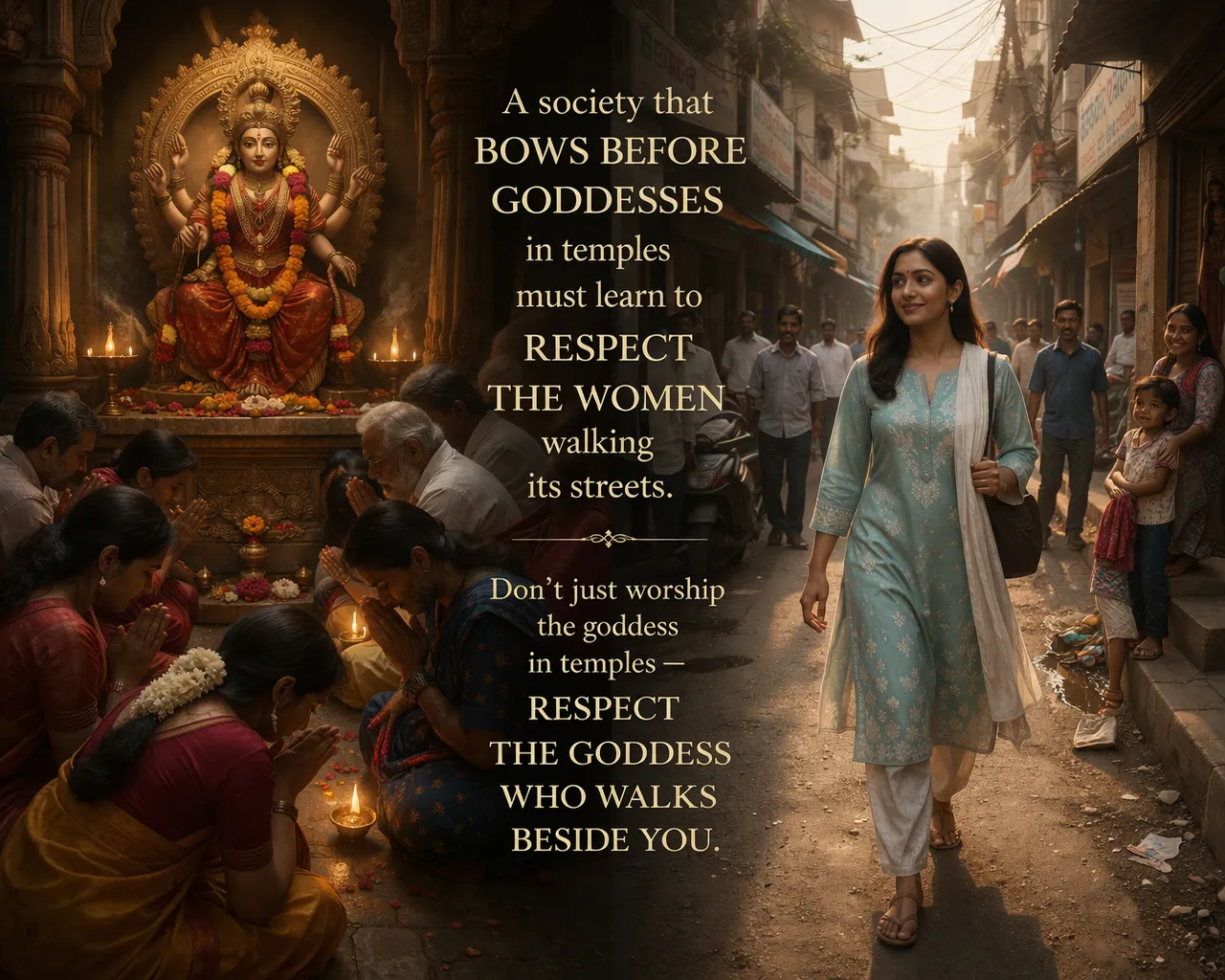
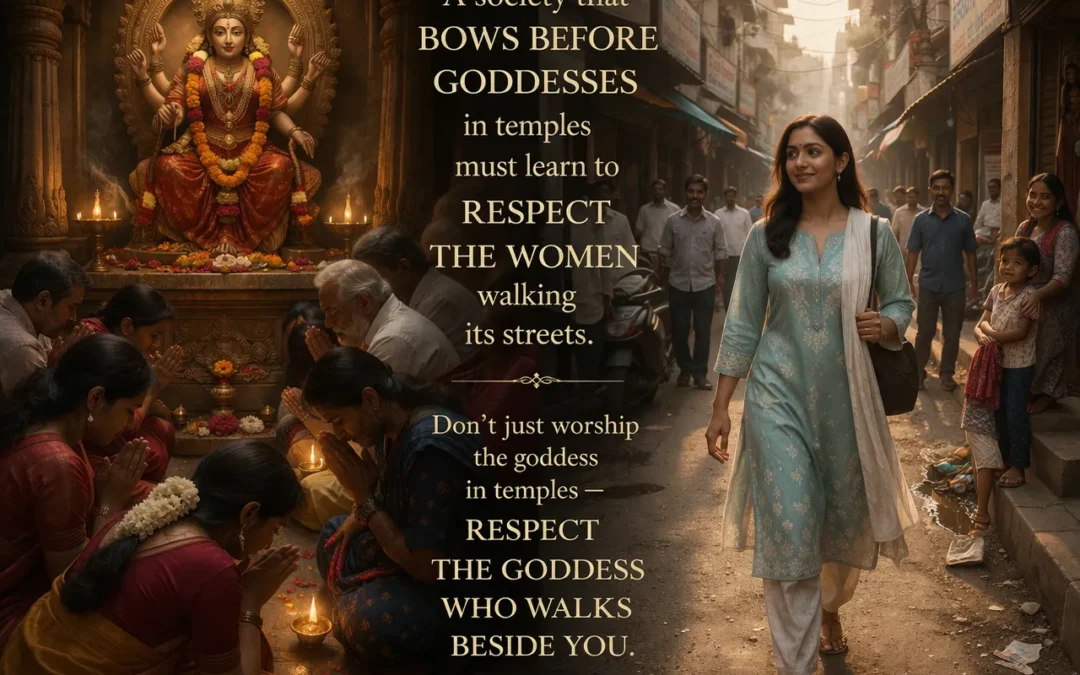
A society that bows before goddesses in temples must learn to respect the women walking its streets.
Don’t just worship the goddess in temples — respect the goddess who walks beside you.
Author’s Bio
Samarpita is a student and an aspiring writer who believes in the power of words to influence minds and challenge societal perspectives. She aims to highlight social realities through her writing. She believes it will inspire thoughtful dialogue that can influence the way society thinks and evolves.