Street Magic to Mentalism: The Journey of Indian Magic
Indian magic, has deep spiritual roots and cultural significance. It has evolved from ancient mystical practices to modern-day performances that captivate audiences worldwide. From the street magic of village fairs to the intellectual allure of mentalism, Indian magic has undergone a fascinating transformation. This journey highlights the integration of mysticism, psychology and entertainment, creating an art form that blends tradition with modern innovation.
The Early Days: Street Magic in Ancient India
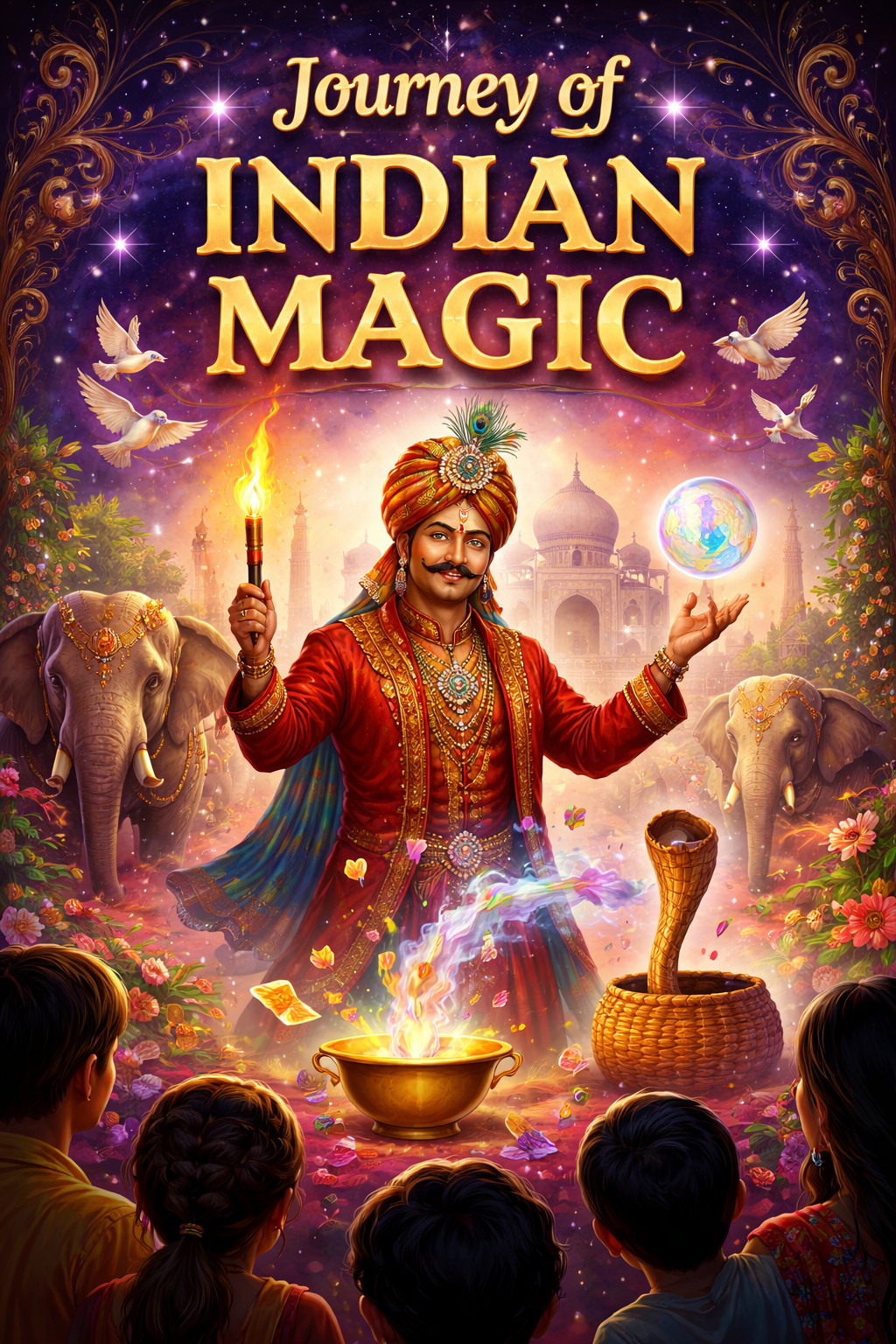
Magic in ancient India was intertwined with religious and spiritual practices. Early forms of magic were not seen as entertainment but as powerful rituals to invoke divine forces. Practices such as Tantra and Yoga played a significant role in this magical tradition. Tantrism involved using spells, rituals and mantras to channel supernatural energies, while yogis were believed to possess mystical powers like levitation and telepathy.
Street magicians, known as “Jadugars,” played a pivotal role in bringing magic into the public domain. These performers showcased their talents at local fairs, villages and markets, mesmerizing audiences with simple yet astonishing tricks. Tricks like coin vanishing, rope tricks and the basket trick, where a person would seemingly disappear and reappear, became iconic. These acts were built on the fundamentals of sleight of hand as well as misdirection techniques that laid the foundation for modern magic.
A quintessential example of street magic was the snake charmer act, where a performer appeared to hypnotize a cobra with a flute. Some believes, the snake’s behavior was trained however the illusion created a sense of mystery and wonder.
The Rise of Stage Magic: Innovation and Grandeur
As India entered the colonial period, the art of magic began to shift. Western influence and the rise of British entertainment introduced new techniques and ideas. The transition from street magic to stage performances marked a significant evolution in Indian magic. Indian magicians, like P.C. Sorcar, revolutionized the craft by combining traditional methods with Western illusionist techniques.
P.C. Sorcar, one of India’s most famous magicians, elevated the art of magic with grand illusions, elaborate stagecraft, and intricate tricks. He introduced larger props and used animals in his performances, creating an experience that captivated audiences in India and beyond. Sorcar’s iconic levitation act, in which he would float above the stage, brought Indian magic to a global stage. His work shifted magic from a folk tradition to a more refined and sophisticated form of entertainment.
The Emergence of Mentalism in India
While traditional magic focused on visual illusions, mentalism emerged as a psychological art form. Originating in the West during the early 20th century, mentalism focuses on feats of the mind, such as mind reading and telepathy. Unlike physical illusions, mentalism relies on suggestion, psychology, and misdirection to create the illusion of supernatural abilities.
In India, mentalism gained popularity in the latter half of the 20th century. Indian magicians began incorporating psychological techniques and the spiritual traditions of mind control and meditation. Some of the most notable Indian mentalists like Suhani Shah, Nakul Shenoy, Chinmay Banerjee, Jadugar Kumar and Karan Singh; blur the lines between reality and illusion with their performance. Their acts often involve reading the thoughts of audience members or predicting their actions, creating a thrilling and immersive experience. His work reflects a unique blend of traditional Indian mysticism and modern mentalism.
Modern-Day Magic and Mentalism in India
Today, Indian magic encompasses a wide array of styles, from street performances to stage illusions and mentalism. The advent of the digital age has transformed magic, with performers leveraging social media and virtual platforms to engage a global audience. Digital magic, involving online tricks and virtual performances, has expanded the reach of Indian magicians, allowing them to share their craft in new, innovative ways.
Technological advancements have also influenced modern-day performances. Virtual reality (VR) and augmented reality (AR) are becoming integrated into magic shows, enabling magicians to create illusions that extend beyond physical boundaries. Indian magicians now combine traditional sleight-of-hand tricks with cutting-edge technology to enhance the magical experience.
Magic 2.0: The Future of Indian Magic and Mentalism

Looking ahead, the future of Indian magic is filled with exciting potential. As technology continues to evolve, artificial intelligence (AI) and machine learning could play a significant role in mentalism, enhancing the ability of magicians to predict or “read” the minds of their audience with greater accuracy. This fusion of technology with psychological feats will create even more mind-blowing performances.
The global appeal of Indian magic, particularly in mentalism, is likely to grow. As mentalism becomes more refined and psychological techniques continue to evolve, Indian magicians will have the opportunity to showcase their unique fusion of ancient mystical traditions with modern entertainment practices. This blending of the old and the new will allow Indian magic to remain relevant on the international stage.
The concept of “Magic 2.0” was popularized by magicians like Jadugar Kumar, who emphasizes the future of magic in a technology-driven world without leaving the art of story telling. With the rise of virtual magic and the potential for greater interactivity, the magic industry will likely see more immersive, interactive performances that blur the lines between magician and audience.
The Enchanting Future
Indian magic has come a long way, from the humble beginnings of street performances to the sophisticated art of mentalism. This evolution reflects the country’s deep-rooted cultural heritage, blending ancient mystical practices with modern entertainment. Today, Indian magicians are not only entertainers but also innovators, incorporating psychology, technology, and global influences into their performances.
The rise of mentalism has opened new doors for exploring the mind and challenging perceptions. As technology continues to reshape the world of magic, Indian magicians are set to captivate audiences with even more complex, immersive, and mind-bending performances. With a rich past and an exciting future, Indian magic promises to remain a dynamic and enchanting art form for years to come.