Raksha Bandhan is one of the most beautiful festivals that celebrate the bond between siblings. On this auspicious day, the sisters tie a sacred thread around their brother’s wrist. This sacred thread is called Rakhi. The traditional ritual symbolizes a brother’s promise to protect and support his sister, throughout her life. It is being celebrated on the Shravan Purnima, the full moon day of Hindu month of Shravan.
Modern Raksha Bandhan
The modern form of Raksha Bandhan has evolved over a period of time. Now, it is not limited to Hindu religion anymore. In India, people across different faiths celebrate the festival of Rakhi. It is no more restricted to siblings either. Now, people who are not even related by blood also tie the thread of Rakhi and cherish the festival. They simply embrace the message of love, trust, protection and affection that comes with this beautiful festival.
Another modern practice associated with Rakhi is, the exchange of gifts. The brothers are supposed to gift their sisters on this auspicious day. But being a curious mind, I would like to know, does our scripture speaks about Raksha Bandhan and these related modern rituals. What are the stories and legends associated with this festival?
The Legend around Raksha Bandhan
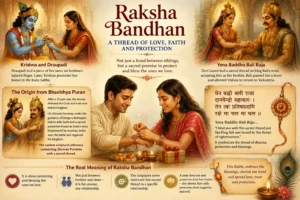
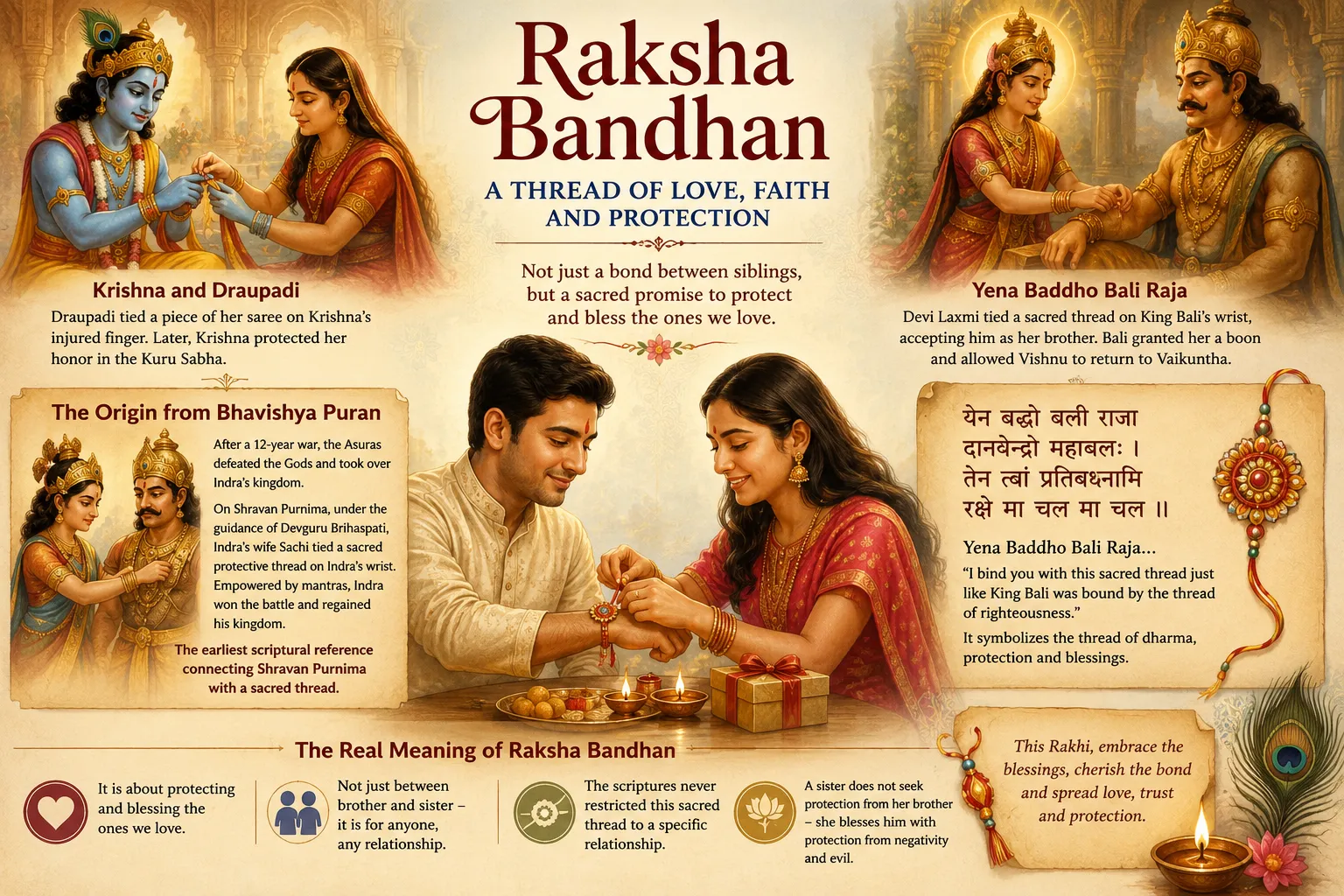
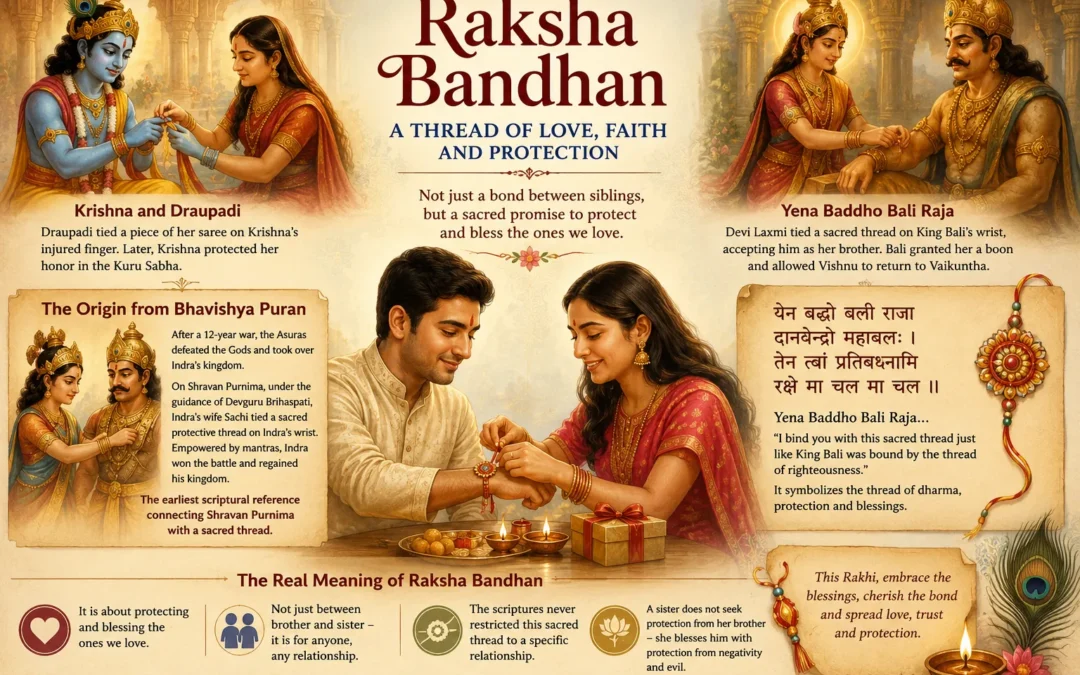
If we delve into Hindu mythology, we do come across a few stories related to Raksha Bandhan. The most famous story is surrounding Bhagwan Krishna and Draupadi. According to the popular legend, once Bhagwan Krishna injured his finger. When Draupadi noticed it, she immediately tore a piece from the corner of her saree and tied it around his finger. Later, when Draupadi was humiliated in the royal Kuru Sabha, Bhagwan Krishna saved her dignity. The story often interpreted as Bhagwan Krishna honoring his promise to protect Draupadi throughout her life, in return for that special thread, with which she had bound him as her protector.
It is a classic story and the devotional feel is at its best. However, like many of our legends, they are woven around the festivals, on a much later date. This legend is also not there in any of our scriptures. So, it is created around this festival to make it more meaningful and relatable. The story beautifully captures the essence of the festival but it is not the origin of the festival Raksha Bandhan.
The Origin of Raksha Bandhan
In the Vedas there are many stories that speak about a protection thread but they are not related to Shravan Purnima. So, we should not consider them as the modern Rakhi festival. So, does any scripture mentions Shravan Purnima and a scared thread? The answer is “Yes”. It is there in Bhavishya Puran.
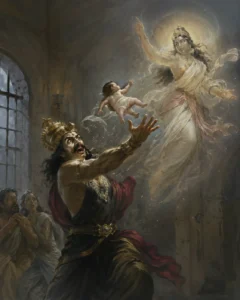
According to this legend, the war between the Gods and the Asuras continued for 12 long years. At the end, the Asuras won the war, taking full control of Indra’s Kingdom. A defeated and dejected Indra consulted Devguru Brihaspati. Under his guidance, a protective ritual was performed on Shravan Purnima. The protective power of mantras invoked in a sacred protective thread. Indra’s wife Sachi, tied that sacred thread around Indra’s wrist, to protect him. Indra returned to the battle and defeated the Asuras to regain his kingdom. This story from the Bhavishya Puran is considered one of the earliest scriptural references connecting Shravan Purnima with the tradition of a sacred protective thread.
Now, the key take away from this story is that Raksha Bandhan was not about brother and sister bonding. It was more about protecting your loved ones, through a sacred thread. Although, the concept of a protection thread is older than Bhavishya Puran but the association of Shravan Purnima makes this, the oldest scriptural reference to Raksha Bandhan.
King Bali and Devi Laxmi
There is one more popular legend that connects King Bali and Devi Laxmi, as brother and sister. It starts with King Bali being sent to netherworld by Vamana Avatara of Bhagwan Vishnu. Pleased with the devotion of demon King, Bhagwan Vishnu agrees to remain with Bali as his guardian. Then Devi Laxmi visits Bali and ties a sacred thread on his wrist, accepting him as her brother. Moved by this gesture, the demon King gives her a boon and Devi Laxmi asks for Vishnu’s return to Baikuntha. Honoring her request, Bali allows Vishnu to return to his divine abode.
In the Bhagavata Puran, the story of Vamana and Bali is narrated up to the point where Bhagwan Vishnu agrees to be the guardian of King Bali. But Devi Laxmi tying the thread to Bali; is not found there. Just like the Bhagwan Krishna and Draupadi story; this also appears to be a later addition to make this festival emotionally more appealing.
Yena Baddho Bali Raja
During the Raksha Bandhan festival, many sisters recite this famous Rakhi Mantra which starts with these words “Yena Baddho bali Raja….”. Does that mean, it is the first scriptural reference of Raksha Bandhan between siblings? “NO”. Let us understand the mantra first. The meaning of this mantra is, “I bind you with this sacred thread just like King Bali was bound by the thread of righteousness”. It does not speak about brother and sister affection. It talks about the thread of righteousness.
Interestingly, in the Bhavishya Purana, there is a reference to Sharavan Purnima and King Bali. It says, on the auspicious day of Shravan Purnima, the King performs a specific ritual. A raksha thread is prepared and the royal priest ties that on the King’s hand for his protection. And this is the scripture from where the famous line of “Yena Baddho Bali Raja” was derived. The mantra refers to the sacred bond of protection associated with King Bali, rather than specifically describing a brother-sister relationship.
The Real Meaning of Raksha Bandhan
Going by the legends and stories from the scriptures, it is not wrong to say that, the real essence of Raksha Bandhan is about protecting the person you love. For instance, Sachi tied the sacred thread on her husband’s wrist to protect him. It was never restricted to siblings. Does that mean, we are celebrating the festival incorrectly, since ages? NO. Absolutely Not.
The scriptures never said that the Shravan Purnima Raksha Thread is only meant for a specific relationship. It simply means, anyone can tie this raksha thread to someone they wish to protect and bless. So, the celebration between siblings is not wrong at all. However, the popular interpretation of Rakhi as a promise by the brother to protect his sister is not fully reflecting the essence of our scriptures. As per the scriptures, the central idea behind this is, protecting and blessing the people we love. So, this year when your sister ties this Rakhi thread on your wrist, remember that she does not want protection. Instead through this sacred thread, she gives you her blessings and protection from negativity and evil.